Carbrooke Branch
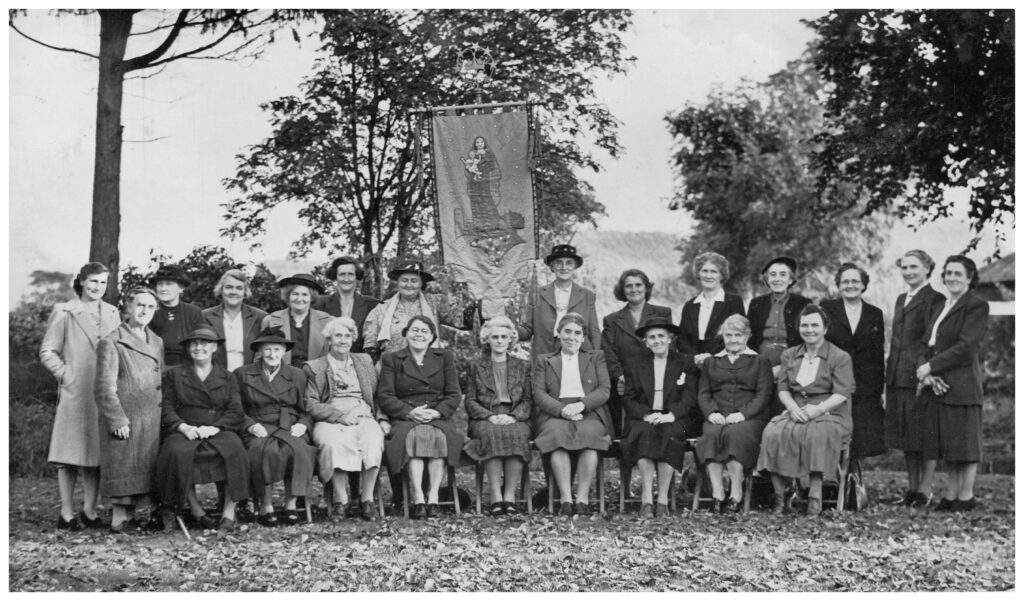
Extracts from the vicars’ logs show that it was certainly active from the 1920s.
Rev G. B. Chambers – October 1927- July 1955
There is a branch of the Mothers Union and the Guild of Health whose meetings are held at regular intervals. Both these organisations are active and important because they represent locally the work of much larger bodies and have exercised influence in the Parish
Rev W.C. Tolchard – November 1955 – November 1959
The only ‘organisation’ for which the church is responsible is a branch of the Mothers Union. – 19 names are on the Register. There is no Enrolling member & so I have regarded it as monthly meeting of some Church people for further instruction. It is possible to get M.U. Speakers to address the meetings.
Rev T.H. Callender March 1966 – August 1978
With regard to the organisations, the Mothers Union continues to meet monthly, with Mrs Callender as Enrolling Member, and later as Presiding Member for the Deanery.
1981
During April the Mothers Union was re-established and regular meetings arranged for the first Wednesday in each month
Although restarted in 1981 the Carbrooke branch had ceased to meet by 1985. A group is still active in the nearby town of Watton.
Who are the Mothers’ Union
The Mothers’ Union was founded in 1876 by Mary Sumner in Old Alresford. At first, it was a small local group created to help families teach Christian values at home. By the end of the 1800s, it had grown into a national organisation, and in 1926 it received a Royal Charter. Its early focus was supporting family life and helping parents raise children with strong moral guidance, all organised through local church groups.
When the Second World War began, the Mothers’ Union had to adapt quickly. Instead of focusing only on spiritual support, it became heavily involved in practical community work. Members helped welcome and settle evacuee children who had been moved from cities to the countryside. They also set up community kitchens and supported the “Make‑do and Mend” campaign, which encouraged people to repair clothes during wartime shortages.
The 1940s were also the decade when the Mothers’ Union became more active in national politics. Their campaigning helped influence the Family Allowances Act of 1945, which made sure that child benefit payments were given directly to mothers. This was a major step forward for women’s financial independence.
By the end of the decade, the Mothers’ Union had become both a faith‑based community and a powerful social network that could help shape national policy.
Mother Union Website – Norwich Diocese